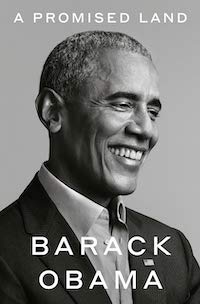
Barack Obama’s A Promised Land is the first volume of his presidential memoirs, covering his early life and political career through the first two and a half years of his presidency, ending with the raid that killed Osama bin Laden in May 2011. Published in 2020, the book is an unusually introspective political memoir, one that moves between the broad sweep of history and the intimate texture of governing, family life, and self-doubt. Obama writes with evident care and a novelist’s attentiveness to detail, rendering not just the mechanics of policymaking but the emotional and moral weight of decisions made under pressure and in the full glare of public scrutiny.
The book traces Obama’s journey from his unconventional childhood in Hawaii and Indonesia, through his years as a community organizer in Chicago, his time at Harvard Law School, and his rise through Illinois politics, to the improbable campaign that made him the first Black president of the United States. Once in the White House, Obama is candid about the limits of idealism when confronted with entrenched political opposition, the complexities of the 2008 financial crisis, the grinding legislative battle to pass the Affordable Care Act, and the moral ambiguities of counterterrorism policy. He is reflective about race — about what his election meant to different Americans and about the ways in which his identity shaped both his opportunities and the hostility he faced. Throughout, he returns to the central tension of the book: the gap between the promise of American democracy and the difficult, often frustrating reality of trying to move it forward.
Obama’s prose is measured and sometimes lyrical, occasionally veering toward the professorial, but consistently honest about his own uncertainties. He does not write as a triumphalist. He acknowledges mistakes, describes the toll the presidency took on his family, and grapples openly with the compromises that power demands. The title itself — borrowed from the biblical image of a land visible but not yet reached — captures the book’s essential mood: hopeful but unsentimental, aware that progress is real even when it falls short of what was imagined.
Key takeaways
-
The presidency as a study in constraint: Obama repeatedly emphasizes how little room a president actually has to maneuver — hemmed in by Congress, the bureaucracy, inherited crises, and the short attention span of the news cycle. Idealism survives in office, he suggests, only if it is paired with patience and pragmatism.
-
The Affordable Care Act as a defining struggle: The lengthy battle to pass healthcare reform is treated as the central legislative achievement of this period, but also as a lesson in how political capital is spent and how quickly public goodwill can erode when policy becomes partisan trench warfare.
-
Race and the symbolic weight of the presidency: Obama writes thoughtfully about what his election meant to Black Americans and to people around the world, while also being clear-eyed about the backlash it provoked — including the rise of the birther movement — and about the ways he felt he had to modulate his identity to be politically viable.
-
The financial crisis and its moral failures: His account of the 2008–2009 economic collapse is critical of Wall Street but also self-critical — he acknowledges that his administration’s response, while stabilizing the economy, did not adequately punish those responsible or address the suffering of ordinary Americans who lost homes and jobs.
-
The human cost of command decisions: Obama is unusually candid about the psychological burden of ordering drone strikes and special operations raids, describing the meticulous care taken to minimize civilian casualties while acknowledging that such deaths still occurred and weighed on him.
-
Michelle Obama and the private cost of public life: The memoir is frank about the strain the presidency placed on his marriage and family, and respectful of what his wife sacrificed — her own career, her privacy, and her comfort — to support an ambition that was fundamentally his.
-
Hope as a discipline, not a feeling: Running through the book is Obama’s argument that hope is not naïve optimism but a conscious choice to act in the face of uncertainty — a theme that connects his community organizing roots to his understanding of what democratic politics, at its best, can accomplish.