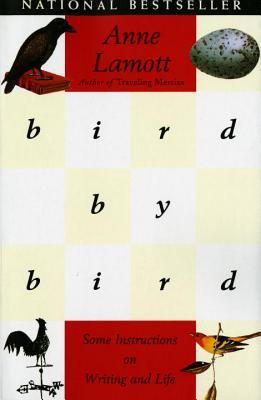
Anne Lamott’s Bird by Bird: Some Instructions on Writing and Life is part craft manual, part personal memoir, and entirely a work of encouragement. Published in 1994, it grew out of the writing courses Lamott had been teaching for years, and it carries all the warmth, humor, and hard-won honesty of someone speaking directly to a room full of anxious, hopeful writers. The title comes from a story about her brother, who at ten years old was overwhelmed by a school report on birds he’d left until the last minute. Their father sat beside him and said, simply, “Bird by bird, buddy. Just take it bird by bird.” That anecdote becomes the book’s governing philosophy: that the only way through a large, daunting creative project is one small, manageable piece at a time.
Lamott moves through the writing process from first drafts to publication, but she is less interested in mechanics than in the psychological and emotional terrain writers must navigate. She is bracingly honest about the terror of the blank page, the inner critic that silences so many voices before they get started, and the particular loneliness of a creative life. Her own voice is conversational, self-deprecating, and frequently very funny, yet she never lets the humor soften her central insistence that writing requires genuine courage and sustained effort. She draws on her own struggles as a novelist and her experiences teaching others to make the case that good writing is not a gift handed down to a lucky few but a discipline available to anyone willing to sit down, make a mess, and keep going.
Key takeaways
-
Shitty first drafts are essential. One of Lamott’s most celebrated ideas is that almost all good writing begins as terrible writing. Giving yourself permission to write badly in a first draft — to get the material down without judgment — is not a compromise but a necessary stage of the process. Perfectionism is the enemy of output.
-
The “one-inch picture frame” as a focusing tool. When overwhelmed by scope, Lamott advises writers to narrow their attention to something as small as what can be seen through a one-inch picture frame — a single scene, a moment, one concrete detail. Small assignments make large projects survivable.
-
Silencing the radio station KFKD. Lamott names the self-critical, catastrophizing inner monologue that plagues writers “KFKD” (K-Fucked), broadcasting alternating messages of grandiosity and worthlessness. Recognizing this noise for what it is — not truth, just static — is essential to doing the work.
-
Writing as a way of paying attention. Throughout the book, Lamott returns to the idea that writing is fundamentally a practice of noticing the world. Good writers are good observers first, and the discipline of putting experience into words deepens one’s relationship to life itself, independent of publication or success.
-
Publication will not save you. Lamott is unusually candid about the emotional letdown that follows publication. Writers who expect a book deal or good reviews to resolve their anxieties and validate their existence will be disappointed. The work itself has to be the reward, because the fantasized arrival rarely delivers what the imagination promised.
-
Character and plot grow from honesty. Lamott argues that the most compelling fictional characters emerge when writers are willing to tell the truth — including unflattering truths about themselves — rather than constructing idealized or safe versions of people and experience. Authenticity on the page requires a willingness to be exposed.
-
Community and school matter. While much of the book focuses on solitary discipline, Lamott also emphasizes the value of finding writing groups and trusted readers. The experience of being heard, of having someone else take your work seriously, is not a luxury but part of what sustains a writing life over the long term.