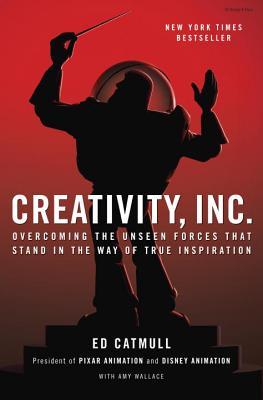
Ed Catmull, co-founder of Pixar Animation Studios, tells the story of how one of the most creatively successful companies in Hollywood was built — and, more importantly, how it was kept from falling apart. Written with journalist Amy Wallace, Creativity, Inc. is part memoir, part management manual, tracing Catmull’s journey from a kid in Utah who dreamed of making the first computer-animated feature film to the president of both Pixar and Disney Animation. The book is candid about the obstacles along the way: technical, financial, and above all human. Catmull is a quietly passionate narrator, more interested in systems and blind spots than in self-congratulation, and he writes with genuine intellectual humility about what it takes to sustain a creative culture over decades.
The book’s central argument is deceptively simple: creativity is fragile, and the greatest threat to it is not a lack of talent but a lack of honest communication. Catmull argues that most organizations unconsciously suppress the candor they need to catch and fix their own mistakes. At Pixar, the answer was a set of deliberate structures — most famously the “Braintrust,” a group of senior filmmakers who give blunt, non-hierarchical notes on films in progress — designed to surface problems early, before they become catastrophes. But Catmull is careful to insist that no single process is the solution. The real goal is to build a culture that can identify and dismantle its own invisible obstacles, which he calls “the unknown unknowns” — the problems you cannot see because your very position inside a system hides them from you.
Key takeaways
-
The Braintrust model of feedback: Pixar’s most important creative tool is a regular peer review in which experienced filmmakers critique each other’s work with total candor. Crucially, the Braintrust has no authority to direct changes — it can only advise, leaving creative control with the director. This separates honest diagnosis from coercive management.
-
Protecting the “ugly baby”: Catmull uses the metaphor of a newborn to describe early-stage creative ideas. They are often ungainly and hard to love, but they need protection from premature judgment. Organizations that demand polished ideas from the start kill originality before it can develop.
-
Fear is the hidden enemy: Many management failures stem not from malice but from fear — fear of embarrassment, of conflict, of delivering bad news. Catmull argues that leaders must actively create conditions where people feel safe surfacing problems, because a culture that shoots messengers will eventually run out of honest ones.
-
The acquisition of Disney Animation: A significant portion of the book covers what happened after Steve Jobs sold Pixar to Disney in 2006 and Catmull and John Lasseter were handed creative control of Disney Animation as well. Catmull describes the challenge of transplanting Pixar’s culture into a larger, more entrenched studio — a case study in how difficult it is to change an organization’s habits without simply imposing your own.
-
Success is its own danger: Catmull is unusually frank about the way that winning can breed complacency and orthodoxy. After a string of hits, Pixar’s own processes began to calcify. The near-failure of several films (including Toy Story 2, which was essentially remade from scratch in nine months) serves as recurring evidence that no creative institution is ever permanently safe.
-
Leaders must seek out what they cannot see: The book returns again and again to the idea that people at the top of an organization are systematically misled — not through lies, but through the natural filtering of information as it travels upward. Catmull’s prescription is to build structures (postmortems, open forums, anonymous surveys) that route around hierarchy and deliver uncomfortable truths directly.
-
Steve Jobs as a complicated collaborator: Catmull offers one of the more nuanced portraits of Jobs in print, describing a man who was often wrong, sometimes brutal, and genuinely changed over time. He credits Jobs’s patience — his willingness to fund Pixar through years of losses without demanding creative control — as essential to everything that followed, while never pretending the relationship was easy.