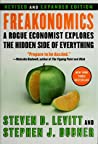
Steven Levitt is an economist with a gift for asking uncomfortable questions, and Stephen Dubner is a journalist with a gift for making the answers readable. Together they produced Freakonomics, a book that applies the tools of economic analysis — incentives, data, and a willingness to follow evidence wherever it leads — to subjects that economists are not supposed to care about: sumo wrestling, crack cocaine, the Ku Klux Klan, and the mystery of why crime fell so dramatically in the United States during the 1990s. The book has no single unifying thesis beyond the provocation that conventional wisdom is frequently wrong, and that the world makes a lot more sense once you start asking the right questions rather than accepting the answers you’ve been handed.
The authors move briskly through a series of loosely connected case studies, each designed to overturn an intuitive assumption. Why do drug dealers live with their mothers? Because the economics of street-level crack dealing look less like a criminal empire and more like a franchise with terrible odds at the bottom. What do schoolteachers and sumo wrestlers have in common? Both, under the right conditions, cheat. The book’s most controversial chapter argues that the dramatic decline in violent crime in the 1990s — which experts attributed to better policing, gun control, and a strong economy — was significantly driven by the legalization of abortion following Roe v. Wade in 1973, which reduced the number of unwanted children who, statistically, faced the highest risk of becoming criminals. The argument is not a moral endorsement of abortion but a demonstration of how distant causes produce unexpected effects. Throughout, Levitt and Dubner write with irreverence and genuine curiosity, treating economic thinking less as a discipline and more as a lens for seeing hidden patterns in human behavior.
Key takeaways
-
Incentives are the cornerstone of modern life. People respond to incentives — economic, social, and moral — in predictable ways, and understanding those incentives often explains behavior that otherwise seems irrational or mysterious.
-
Conventional wisdom is often wrong. The book repeatedly shows that widely shared, confidently held beliefs — about crime, parenting, real estate agents, and more — collapse under rigorous scrutiny of the underlying data.
-
The legalization of abortion may have been the biggest driver of the 1990s crime drop. Levitt’s most famous and contested finding holds that cohorts of unwanted children who were never born, following Roe v. Wade, account for a substantial portion of the decline in violent crime two decades later.
-
Information asymmetry creates power. Experts — real estate agents, car dealers, insurance brokers — exploit the gap between what they know and what their clients know. Levitt and Dubner show that closing that gap, as the internet tends to do, dramatically shifts the balance of power.
-
Street-level drug dealing is brutally hierarchical and poorly compensated. Using actual financial records from a Chicago crack gang, the authors show that foot soldiers earn below minimum wage while accepting enormous physical risk, because they are betting on a lottery ticket to reach the top of a winner-take-all hierarchy.
-
Parenting inputs matter less than parenting identity. An analysis of school test data suggests that what parents are — their education, socioeconomic status, the books already on the shelf — predicts children’s outcomes far better than what parents do, undermining a vast parenting-advice industry built on the opposite assumption.
-
Cheating is rational and widespread when the stakes are high and monitoring is low. From Chicago schoolteachers manipulating standardized test results to protect their jobs, to sumo wrestlers trading bouts to protect rankings, the book finds evidence of strategic dishonesty wherever incentives and opportunity align.