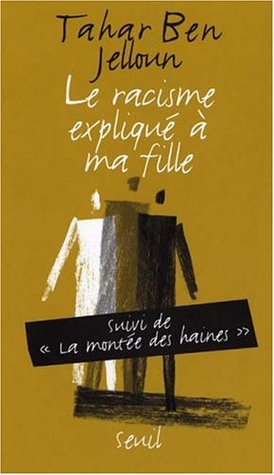
Tahar Ben Jelloun’s Le racisme expliqué à ma fille grew out of a real conversation the Moroccan-French author had with his ten-year-old daughter after they attended a demonstration against the Front National in Paris in 1997. Struck by her questions about what racism actually is and where it comes from, Ben Jelloun decided to write up their exchange as a short, accessible book. The result is a dialogue in which a child’s curiosity drives the conversation forward, prompting clear, honest answers about prejudice, discrimination, xenophobia, and the historical roots of racist ideology. The tone is warm and patient without being condescending, and the book manages to treat a painful subject with both moral seriousness and genuine accessibility.
The book moves from foundational definitions — what is a racist, what is a foreigner, what is difference — toward more complex historical and social territory, including colonialism, the Holocaust, antisemitism, and everyday discrimination in schools and workplaces. Ben Jelloun is careful to distinguish between the natural human tendency to notice difference and the learned, destructive habit of transforming difference into hierarchy. Throughout, he insists that racism is not innate but taught, and that it can therefore be unlearned. His own position as a Moroccan writer living in France lends the text a personal authority; he is not speaking purely from theory but from experience of being regarded as “other.” The voice remains conversational and measured, occasionally interrupted by the daughter’s follow-up questions, which keep the text grounded in the kind of concrete, unsettling curiosity children actually bring to hard subjects.
Key takeaways
-
Racism is learned, not innate. Ben Jelloun argues firmly that no child is born racist; prejudice is transmitted through family, environment, and culture, which means education and awareness can counteract it.
-
Fear and ignorance are racism’s main engines. The book identifies anxiety about the unfamiliar — different skin, different customs, different religion — as the emotional fuel that allows stereotypes to harden into hatred.
-
Distinguishing difference from inferiority is crucial. Noticing that people differ is natural and even enriching; racism begins at the moment difference is ranked, with one group declared superior and another lesser or threatening.
-
Historical atrocities are presented as consequences, not aberrations. Colonialism and the Holocaust are explained to the child as extreme but logical outcomes of racist thinking taken to its conclusion, making the stakes of everyday prejudice legible rather than abstract.
-
Antisemitism receives specific attention as one of the oldest and most lethal forms of racism in Western history, rooted in scapegoating and the projection of social anxieties onto a minority group.
-
Everyday racism — in schools, in hiring, in housing — is as important to address as spectacular violence. Ben Jelloun wants the child (and the reader) to recognize discrimination in ordinary, undramatic settings where it is easily ignored or rationalized.
-
Resistance begins with language and awareness. The book’s central practical message is that naming racism when you see it, refusing to laugh at racist jokes, and questioning inherited prejudices are concrete acts anyone can perform, even a child.