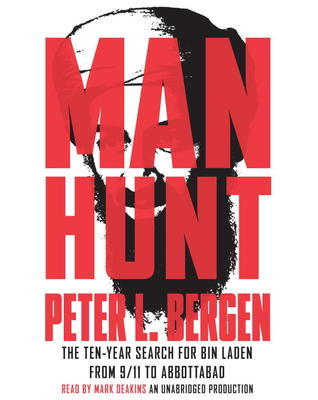
Peter Bergen’s Manhunt is a meticulous account of the decade-long American pursuit of Osama bin Laden, from the ruins of September 11, 2001 to the Navy SEAL raid on a compound in Abbottabad, Pakistan, on May 2, 2011. Bergen, a CNN national security analyst who had conducted one of the few Western television interviews with bin Laden in 1997, brings both journalistic rigor and rare personal proximity to his subject. The book draws on interviews with senior CIA officers, military commanders, counterterrorism analysts, and key policymakers to reconstruct not just the final operation but the years of intelligence work, bureaucratic friction, and human cost that preceded it.
At its core, Manhunt is a story about institutional persistence in the face of repeated frustration. Bergen traces how the CIA’s bin Laden-focused unit, including the analysts who became obsessed with finding him long before the public shared their urgency, kept the hunt alive through two presidential administrations, shifting strategic priorities, and a trail that repeatedly went cold. He examines how bin Laden managed to survive in Pakistan for nearly a decade — living in plain sight in a military garrison town yet remaining invisible — and how a combination of patient intelligence work, signals analysis, and a crucial lead on a trusted courier eventually led analysts to the compound in Abbottabad. Bergen’s prose is clear and propulsive without being sensationalist; he aims for accuracy over drama, though the drama is abundant on its own terms.
The book also grapples seriously with bin Laden as a historical figure, examining how his ideology evolved in his final years and what his death meant for al-Qaeda as an organization. Bergen argues that by the time of his death, bin Laden was more operationally involved in planning attacks than many had assumed, actively corresponding with affiliates and attempting to guide the group’s strategy. At the same time, al-Qaeda had already been substantially weakened, and bin Laden’s isolation had left him increasingly disconnected from the broader jihadist currents his movement had helped unleash. Bergen is careful to distinguish between the symbolic and operational consequences of the raid, offering a sober assessment rather than a triumphalist one.
Key takeaways
-
The courier was the critical break. The CIA’s years of work culminated in identifying Abu Ahmed al-Kuwaiti, bin Laden’s trusted personal courier. Tracking his movements and communications — and notably, what he didn’t say on the phone — eventually led analysts to the Abbottabad compound, illustrating how patient, granular intelligence work ultimately cracked the case.
-
Bin Laden remained operationally engaged. Documents recovered from the compound revealed that bin Laden was not merely a figurehead in his final years but was actively writing to affiliates, directing strategy, and fretting over al-Qaeda’s public image and the civilian casualties caused by its branches — particularly in Iraq and Yemen.
-
The CIA’s female analysts were central to the hunt. Bergen highlights that several of the most tenacious and effective analysts pursuing bin Laden were women, a fact that sat in quiet irony alongside the ideology of the man they were chasing. Their sustained focus over years, often against institutional skepticism, was decisive.
-
Pakistan’s role was deeply ambiguous. Bergen does not conclude that Pakistani officials knowingly sheltered bin Laden, but he makes clear that the ISI’s relationships with various militant groups, and the sheer improbability of bin Laden living undetected in Abbottabad for years, left profound and unresolved questions about Pakistani complicity or negligence.
-
Obama’s decision involved genuine uncertainty. The intelligence community was far from unanimous that bin Laden was actually in the compound before the raid. Bergen details how analysts placed varying levels of confidence in the finding, and how Obama’s decision to authorize the mission was a genuine risk taken under conditions of deep uncertainty — not a foregone conclusion.
-
The raid nearly went wrong. One of the two Black Hawk helicopters lost lift in the compound’s warmer-than-expected air and crashed against the compound wall. The SEALs adapted and completed the mission, but the mechanical failure was a reminder of how close the operation came to a potential disaster on the scale of the 1980 Desert One debacle in Iran.
-
Bin Laden’s death was symbolically enormous but strategically limited. Bergen argues that al-Qaeda had already been severely degraded by drone strikes, counterterrorism operations, and its own brutality alienating potential supporters. Bin Laden’s death mattered enormously as a symbolic moment and a fulfillment of American purpose, but the jihadist movement he inspired had already metastasized well beyond any single leader’s control.