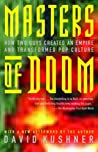
David Kushner’s Masters of Doom tells the story of John Carmack and John Romero, two prodigiously talented programmers who met as young men at a small software company in Shreveport, Louisiana, and together built one of the most influential studios in the history of video games. The book traces their rise from teenage obsessives typing code in their bedrooms to the cofounders of id Software, the company responsible for Wolfenstein 3D, Doom, and Quake — games that didn’t just sell millions of copies but fundamentally reshaped what interactive entertainment could be. Kushner writes with the propulsive energy of a thriller, drawing on extensive interviews to reconstruct scenes in granular, almost novelistic detail.
At its heart the book is a story about creative partnership and its dissolution. Carmack and Romero are presented as near-perfect complements: Carmack the ascetic, monkish engineer who slept on the office floor and cared only for the elegance of his code, and Romero the flamboyant showman who lived for rock-star excess and believed games should feel like heavy metal. For a few electric years their differences amplified each other’s strengths. Then success, ego, and diverging visions drove them apart, and the second half of the book chronicles that unraveling — culminating in Romero’s catastrophic, hugely hyped departure to found Ion Storm and ship the disastrous Daikatana. Kushner treats the collapse with genuine sympathy for both men, refusing to assign simple blame.
Key takeaways
-
The Two Johns as archetypes: Carmack and Romero embody a lasting tension in technology between the engineer who prizes craft and correctness above all else and the visionary who prizes spectacle and ambition — and the book suggests both dispositions are necessary for breakthrough work, at least for a time.
-
id Software invented modern PC gaming infrastructure: Beyond the games themselves, id pioneered shareware distribution (giving the first episode away free), the notion of the game engine as a licensable product, and modding culture — allowing players to build their own levels. These were business and cultural innovations as consequential as the technology.
-
Carmack’s technical leaps were genuinely revolutionary: His successive rendering engines, each solving problems everyone else thought unsolvable, are described in enough accessible detail that a non-programmer can appreciate why contemporaries regarded them as almost magical. His willingness to throw away working code and start over whenever a better approach appeared defined id’s technical culture.
-
Fame and money corroded the partnership: The enormous commercial success of Doom brought sports cars, rock-star lifestyles, and a flood of outside attention that fed Romero’s desire for celebrity while deepening Carmack’s contempt for distraction. The office dynamic shifted from collaborative intensity to resentment and avoidance before the formal break.
-
Romero’s downfall was a cautionary tale about hype: Ion Storm’s Daikatana became a symbol of vaporware hubris in part because of an infamous advertisement (“John Romero’s about to make you his bitch”) that alienated the gaming press and set impossible expectations. Kushner shows how Romero’s promotional instincts, which had once served id brilliantly, became self-destructive when untethered from Carmack’s discipline.
-
Doom’s cultural impact went far beyond entertainment: The game’s extreme violence made it a flashpoint in Congressional hearings about video game content and was later, wrongly, cited in coverage of the Columbine shooting — forcing the industry to confront questions about responsibility and representation that remain unresolved.
-
The book is a portrait of a specific American moment: The early 1990s PC game scene was small enough that a handful of obsessive young men in a rented office in Mesquite, Texas, could genuinely change the world, fueled by Mountain Dew, pizza, and the evangelical belief that games were an art form that mainstream culture hadn’t yet recognized. Kushner captures that particular window with real affection.