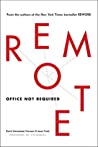
David Heinemeier Hansson and Jason Fried, the co-founders of Basecamp (formerly 37signals), make a direct and enthusiastic case for remote work as not merely a perk or a compromise but a fundamentally superior way to run a company. Written in the punchy, contrarian style that characterizes their other writing, Remote challenges the conventional wisdom that employees must be physically co-located to collaborate effectively, build culture, or be trusted to do their jobs. The book draws on the authors’ own experience running a distributed company with employees spread across multiple time zones and continents, using that example as living proof that the model works.
The argument is organized around dismantling common objections to remote work — that culture suffers, that collaboration becomes impossible, that managers can’t supervise effectively, that only certain jobs can be done remotely — and replacing them with practical counterarguments and concrete tactics. Fried and Hansson are not academics presenting research; they are practitioners presenting conviction, and the book reads accordingly: breezy, opinionated, and direct to the point of occasional oversimplification. Each chapter is short and punchy, aimed at skeptical managers as much as at employees who want ammunition to bring to their bosses.
Key takeaways
-
The office is often the enemy of deep work. The authors argue that open-plan offices and the constant interruptions of in-person culture — impromptu meetings, loud colleagues, “drive-by” conversations — are far more damaging to productivity than the distractions people fear remote workers face at home. Giving employees control over their environment allows them to find or create the conditions where they do their best thinking.
-
Remote work forces better communication habits. When you can’t tap someone on the shoulder, you are forced to write things down, think through requests before making them, and document decisions. This produces a culture of thoughtful asynchronous communication that benefits the whole organization, making knowledge more visible and less siloed inside any one person’s head.
-
Trust is built through output, not observation. One of the book’s central arguments against the managerial fear of remote work is that judging employees by what they produce — rather than by how many hours they appear to be at their desks — is simply better management. If you can’t tell whether a remote employee is working, the problem may be that you never had clear measures of performance to begin with.
-
Geographic freedom unlocks access to better talent. Restricting hiring to a commutable radius around a single office means competing for the same local pool as every other employer in that area. Remote work allows companies to hire from anywhere, and often to attract excellent people who have chosen to live somewhere other than a major metropolitan hub for reasons of family, cost of living, or preference.
-
Remote work requires deliberate culture-building, not its absence. The authors acknowledge that culture doesn’t happen automatically when a team is distributed, but they argue the solution is intentional investment — regular video check-ins, occasional in-person retreats, shared rituals and communication norms — rather than forcing everyone back into an office. Culture built on geography alone is fragile anyway.
-
Managers and companies fear remote work partly for self-interested reasons. The book is candid about the fact that some resistance to remote work comes from middle management whose value is tied to visible supervision, and from executives who equate a big headquarters with organizational prestige. Recognizing this politics-of-the-office dynamic is presented as important for employees trying to make the case internally.
-
Start small and iterate. For organizations nervous about going fully remote, Fried and Hansson suggest beginning with partial experiments — allowing employees to work from home a few days a week, or hiring a first remote employee — rather than treating it as an all-or-nothing transformation. The goal is to accumulate evidence and build trust incrementally until remote becomes normal rather than exceptional.