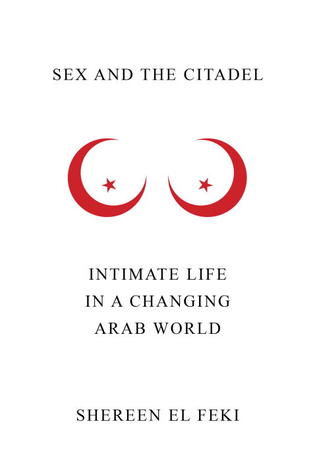
Shereen El Feki’s Sex and the Citadel: Intimate Life in a Changing Arab World is a sweeping, deeply reported investigation into sexuality across the Arab world, written in the years surrounding the Arab Spring. Drawing on hundreds of interviews conducted over five years in Egypt, Tunisia, Morocco, and beyond, El Feki — a British-Egyptian journalist and former vice chair of the UN Global Commission on HIV — explores how sexual attitudes, behaviors, and taboos both shape and reflect the broader political and social structures of Arab societies. Her central argument is that you cannot understand the Arab world’s struggles for freedom and democracy without understanding its intimate life, because the bedroom and the public square are not separate spheres — what happens in one inevitably mirrors what happens in the other.
El Feki writes with rare access and unusual candor, speaking to sex workers, gay men and women, religious scholars, young unmarried couples navigating desire in conservative environments, doctors, activists, and feminists. Her tone is empathetic and intellectually rigorous, never voyeuristic, and she takes care to situate her findings in historical context — pointing out that the Arab world’s relationship with sexuality was once considerably more open and sophisticated than it is today, and that the puritanical norms often presented as timeless tradition are in many cases relatively recent constructions shaped by colonialism, political repression, and the rise of political Islam. The result is a portrait of a region in tension: between ancient traditions of erotic literature and modern sexual conservatism, between the aspirations of the young and the authority of the old, between private lives and public performance.
What emerges is both a sober account of suffering — the humiliation of virginity tests, the criminalization of homosexuality, the precarious lives of sex workers, the epidemic of sexual harassment — and a story of stubborn human resilience and creativity. El Feki finds people finding ways to love, desire, and express themselves in the cracks of rigid social systems, and she argues that these private acts of negotiation and resistance are themselves a form of politics. The book refuses easy conclusions about Islam or Arab culture, insisting instead on specificity, complexity, and the necessity of listening to people on their own terms.
Key takeaways
-
The personal is profoundly political. El Feki’s core thesis is that sexual freedom and political freedom are deeply intertwined — authoritarian governance and sexual repression reinforce each other, so genuine democratic change will require transforming intimate life as well as public institutions.
-
Contemporary conservatism is not timeless tradition. Much of what is presented as immemorial Arab or Islamic sexual morality is historically contingent, shaped by colonialism, nation-building projects, and the twentieth-century rise of political Islam. The Arab world has a rich classical tradition of erotic literature and more pluralistic attitudes toward sexuality that have been largely suppressed or forgotten.
-
Hypocrisy is systemic, not individual. Across the region, El Feki documents a widespread gap between publicly performed piety and private behavior — people engaging in premarital sex, homosexuality, and other activities officially condemned while maintaining outward conformity. This double standard is not mere personal weakness but a structural feature of societies where honesty about sexuality carries severe social and legal penalties.
-
Women bear the greatest burden. From the obsession with female virginity — and the thriving trade in hymen reconstruction surgery — to the pervasiveness of sexual harassment in public spaces, women disproportionately suffer from the region’s sexual anxieties. Their bodies become the terrain on which family honor, national identity, and religious authority are contested.
-
LGBTQ lives exist across the Arab world, invisibly. Gay, lesbian, and transgender people live throughout the region, often in dangerous obscurity. El Feki traces how legal persecution, social stigma, and the absence of any public language for same-sex love create lives of painful concealment, while also finding communities and networks of solidarity that persist despite repression.
-
Religion is contested ground, not monolithic opposition. Islamic scholarship on sexuality is far more diverse and historically rich than either Western stereotypes or conservative clerics suggest. El Feki finds scholars, activists, and ordinary believers arguing from within the tradition for more compassionate and nuanced readings of texts on gender, desire, and the body.
-
Change is coming from below. Despite the setbacks following the Arab Spring, El Feki sees genuine transformation being driven by young people, women’s movements, public health advocates, and sexual rights activists — incremental, fragile, and contested, but real.