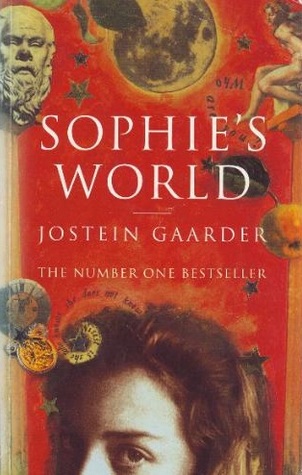
Jostein Gaarder’s Sophie’s World is a Norwegian novel that doubles as an accessible history of Western philosophy. The story follows fourteen-year-old Sophie Amundsen, who begins receiving mysterious letters from an unknown philosopher named Alberto Knox. Through their correspondence and eventually in-person lessons, Sophie is guided through the entire sweep of philosophical thought, from the pre-Socratics and Plato through Descartes, Hume, Kant, Marx, Darwin, and Freud. What begins as an intellectual coming-of-age story gradually reveals a stranger, more unsettling layer: Sophie and Alberto discover that they may themselves be fictional characters inhabiting a novel written by a Norwegian UN officer named Albert Knag as a birthday gift for his daughter Hilde.
This metafictional twist transforms the book from a straightforward philosophical primer into a meditation on consciousness, free will, and the nature of reality — questions that philosophy itself has long wrestled with. Gaarder uses the device to dramatize rather than merely explain key philosophical problems. When Sophie and Alberto realize they are characters in a book, they are forced to confront in a visceral way the same puzzles Descartes posed about the reliability of experience, or that Kant raised about the limits of human perception. The novel is written with warmth and a light touch, making dense ideas feel approachable without flattening them into oversimplification. Gaarder has a talent for analogy and a genuine enthusiasm for the subject that carries the reader through centuries of thought.
Key takeaways
-
Philosophy begins with wonder. One of the book’s recurring refrains is that the ability to feel genuine astonishment at existence — the fact that there is something rather than nothing, that the world is the way it is — is the starting point of all philosophical inquiry. Children and philosophers share this capacity; most adults, Gaarder suggests, have lost it.
-
The history of philosophy as a continuous conversation. Rather than presenting thinkers as isolated geniuses, the book shows each philosopher responding to predecessors. Aristotle corrects Plato, Kant synthesizes rationalism and empiricism, Hegel reacts to Kant — the reader comes away with a sense of philosophy as an ongoing, evolving argument rather than a collection of disconnected doctrines.
-
The metafictional structure enacts philosophical ideas. Sophie’s discovery that she is a character in a novel is not merely a clever plot device; it dramatizes genuine philosophical problems about free will (can she act independently of what the author has written?), the nature of consciousness, and the relationship between creator and creation. The book uses fiction to make abstract epistemology feel urgent and personal.
-
Enlightenment and Romanticism as opposing responses to reason. The novel gives considerable attention to the tension between the Enlightenment’s faith in rational progress and the Romantic movement’s insistence on feeling, nature, and imagination. Gaarder presents this not as a resolved debate but as a live tension that continues to shape how we think about science, art, and the individual.
-
Existentialism as a philosophy of responsibility. In covering Sartre and the existentialists, the book emphasizes that the absence of a predetermined human essence places radical responsibility on the individual. We are “condemned to be free,” and the anxiety this produces is not a pathology but an honest response to the human condition.
-
Darwin and Marx as philosophers, not just scientists or economists. Gaarder situates both thinkers within the philosophical tradition, showing how Darwin’s theory of natural selection challenged teleological views of nature and humanity’s special place in it, and how Marx grounded his critique of society in a materialist philosophy of history, reacting directly to Hegel.
-
Wonder as an ethical as well as intellectual stance. By the novel’s end, Sophie’s philosophical education amounts to more than accumulated knowledge. She has developed a habit of questioning assumptions, resisting comfortable answers, and remaining open to the strangeness of existence — a disposition Gaarder implies is not just intellectually honest but morally valuable in a world prone to dogma and sleepwalking.