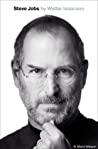
Walter Isaacson’s Steve Jobs is an authorized biography based on more than forty interviews with Jobs himself, conducted over two years, as well as interviews with more than one hundred family members, friends, rivals, and colleagues. Jobs approached Isaacson and asked him to write the book, granting full editorial independence and making no attempt to shape or soften the portrait that emerged. The result is a sweeping account of one of the most consequential and contradictory figures in the history of technology and popular culture — a man who co-founded Apple in a Silicon Valley garage, was ousted from the company he built, and then returned to transform it into the most valuable corporation on earth.
Isaacson traces Jobs’s life from his adoption by a working-class California couple, through his countercultural years at Reed College and his pilgrimage to India, to the founding of Apple with Steve Wozniak and the series of products — the Macintosh, the iMac, the iPod, the iPhone, the iPad — that redefined entire industries. The biography does not flinch from Jobs’s darker qualities: his cruelty toward subordinates, his long denial of paternity for his daughter Lisa, his mercurial rages, and his sometimes delusional certainty about what consumers wanted. Isaacson frames these traits not as incidental flaws but as inseparable from his genius — the same reality-distortion field that made Jobs impossible to work for also made him capable of demanding and achieving what others said was impossible.
The book’s voice is measured and journalistic, assembling testimony from dozens of witnesses and letting contradictions stand. Isaacson is sympathetic but not hagiographic, and he is willing to note when Jobs was simply wrong, petty, or cruel without redemption. The biography also functions as a meditation on creativity and leadership in the digital age, asking what it means to sit at the intersection of technology and the liberal arts — a boundary Jobs claimed as Apple’s defining territory.
Key takeaways
-
The reality distortion field. Jobs possessed an almost pathological ability to convince himself and others that normal constraints — physics, time, market research — did not apply. This willful suspension of limitation drove extraordinary results but also produced a management culture built on intimidation and unpredictability.
-
Control over the whole widget. Jobs’s core design philosophy was end-to-end integration: Apple would control hardware, software, and content together. He believed that the best products came from refusing to let any one element be handed off to someone else, a conviction that put him in direct opposition to the open-platform philosophies of Microsoft and, later, Google.
-
Adoption and identity. Being given up for adoption left Jobs with a lifelong need to feel special and chosen, which Isaacson connects to both his messianic self-image and his pattern of rejecting or abandoning people who depended on him, including his daughter Lisa for much of her childhood.
-
The importance of the liberal arts. Jobs repeatedly argued that pure technologists produce tools while artists produce experiences, and that Apple’s competitive advantage lay in recruiting people who loved both. He kept a photo of Einstein at his desk alongside one of Gandhi, and he cited Bob Dylan and the Beatles as formative influences on his understanding of craft.
-
Near-death and the urgency it created. Jobs’s cancer diagnosis in 2003 and his eventual death in 2011 shaped the final chapters of his career. Knowing he was ill gave his product launches a particular intensity; the iPad, the App Store, and the iCloud strategy were all driven partly by his determination to define Apple’s trajectory before he could no longer do so.
-
The tension between artistic vision and human decency. The biography consistently raises the question of whether Jobs’s treatment of people — belittling engineers, taking credit from collaborators, screaming at suppliers — was necessary to produce great work or whether it was simply cruelty that coexisted with genius. Isaacson declines to fully resolve this, leaving it as an uncomfortable open question.
-
Legacy as product. Jobs thought carefully about how he would be remembered, which is partly why he commissioned the biography at all. He wanted to be understood not as a businessman but as a creator in the lineage of Edwin Land, Henry Ford, and Thomas Edison — someone who bent the world to his imagination rather than polling the world about what it wanted.