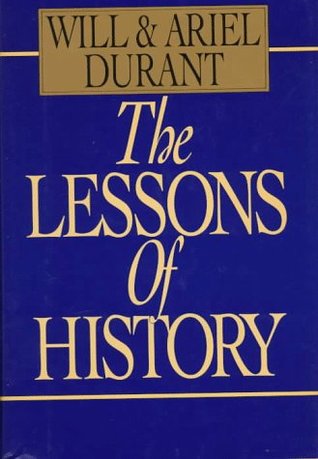
Will and Ariel Durant distilled a lifetime of historical scholarship — the eleven volumes of The Story of Civilization — into this slim, elegant meditation on what the human past actually teaches us. Published in 1968, the book moves through a series of thematic lenses: geography, biology, race, character, religion, economics, government, war, and growth and decay. Rather than narrating events, the Durants step back to ask what patterns repeat, what forces are genuinely determinative, and what conclusions an honest reader of history is forced to accept, however uncomfortable they may be.
The central argument is simultaneously humbling and clarifying. Human nature changes very slowly if at all, and the grand ideological projects of any given era tend to rediscover, often painfully, the same truths that previous civilizations learned and forgot. The Durants write with graceful authority and a certain melancholy realism: they admire progress but are suspicious of those who believe it is inevitable or permanent. Their prose is aphoristic and dense, every sentence carrying the weight of decades of reading. The tone is that of wise elders who have seen enough to resist both cynicism and naïve optimism, and who want to offer something genuinely useful before the curtain falls.
Key takeaways
-
History is mostly the same story retold. Inequality, the concentration of wealth, the rise and fall of moral codes, the collision between freedom and order — these recur across every civilization because they are rooted in human biology and psychology, not in contingent social arrangements.
-
Inequality is natural and persistent. The Durants argue that nature does not distribute ability equally, and therefore any society that allows talent to operate freely will generate economic inequality. Redistribution can compress the gap temporarily, but extremes of concentration eventually provoke revolution, which resets the cycle without eliminating the underlying dynamic.
-
Religion has been indispensable to social order. Whatever its metaphysical truth, religion has historically encoded moral norms, consoled the suffering, and restrained behavior that no police force could effectively police. When religion weakens, the Durants suggest, morality tends to erode before secular substitutes are firmly in place.
-
Freedom and equality are in tension. These two ideals, so often paired in political rhetoric, actually work against each other: the more freedom individuals have to exercise their differing abilities, the more unequal outcomes become. A society must choose how to balance them rather than pretend the tension does not exist.
-
War is one of history’s constants. The Durants count very few years in recorded history entirely free of organized warfare, and they treat the impulse toward conflict as deeply embedded in competition for resources, territory, and dominance. Peace is an achievement that requires active maintenance, not a default state.
-
Great civilizations grow from geographic and economic foundations before flowering in culture. Abundance and security create the surplus — of time, resources, and attention — that makes philosophy, art, and science possible. When those foundations erode, cultural vitality follows.
-
The past offers reasons for cautious hope. Despite wars, collapses, and recurring barbarity, the Durants note that moral progress — the slow expansion of who counts as deserving of rights and consideration — is real, if fitful. History does not guarantee a good outcome, but it shows that human beings are capable of learning, even if the lessons must often be relearned at great cost.