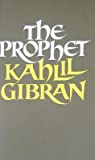
Kahlil Gibran’s The Prophet, first published in 1923, is a work of lyrical prose poetry structured around the departure of Almustafa, a prophet who has lived for twelve years in the fictional city of Orphalese and is now preparing to sail home. Before he leaves, the people of the city gather to ask him questions about the fundamental experiences of human life — love, marriage, children, work, joy and sorrow, freedom, death, and many more. Almustafa’s responses form the body of the book: a series of meditative, parable-like discourses delivered in elevated, incantatory language that draws on Gibran’s Lebanese heritage, the King James Bible, Sufi mysticism, and the Romantic tradition.
The book’s central argument, if it can be reduced to one, is that all apparent opposites — joy and sorrow, giving and receiving, freedom and togetherness — are not truly in conflict but are expressions of a single underlying unity. Gibran writes with the cadence of scripture and the intimacy of a personal letter, addressing the reader directly through Almustafa’s voice. The tone is earnest and consoling, avoiding dogma in favor of a generous, universalist spirituality that has made the book beloved across cultures and generations. Its brevity — fewer than 100 pages — belies the ambition of its scope, as it attempts nothing less than a complete philosophy of how to live and how to face death.
Key takeaways
-
On love and marriage: Gibran counsels lovers to stand together yet apart — “let there be spaces in your togetherness” — treating love not as possession but as a living thing that requires freedom to flourish. Spouses are described as pillars that hold up the same roof while remaining distinct.
-
On children: Parents are urged to recognize that their children are not their own. Children come through parents but belong to life itself, and it is a parent’s purpose to serve as the bow from which the child, the living arrow, is sent forward into the future.
-
On work: Labor done with love is a form of spiritual practice. Gibran argues that work is “love made visible,” and that to work without love — merely for survival or obligation — is to hollow out one’s life. Every trade and craft is equally sacred when performed with full engagement.
-
On joy and sorrow: The two are inseparable, carved from the same interior space. The deeper one’s capacity for sorrow, the greater one’s capacity for joy; the cup that holds your wine is the very cup that was burned in the potter’s oven. This pairing runs through many of Gibran’s discourses as a unifying theme.
-
On freedom: True freedom, Gibran suggests, is not liberation from all bonds but the conscious acceptance of those bonds one would choose freely. He cautions that the desire to be entirely unbound can itself become a chain, and that authentic freedom lives in the alignment of one’s inner nature with one’s outward life.
-
On death: Almustafa frames death not as an ending but as a deepening of life — another threshold, like sleep, through which the soul passes into a larger existence. He encourages the people of Orphalese not to grieve but to trust that what they cannot fully understand is nevertheless purposeful and continuous.
-
On giving: True generosity, Gibran argues, is not the calculated transfer of surplus but the pouring out of one’s self. He distinguishes between giving from abundance (which costs little) and giving from the core of one’s being — an act that makes the giver and receiver alike. He also gently critiques the pride that can hide inside charitable acts.