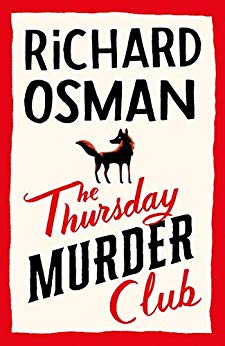
Richard Osman’s debut novel is a charming and witty British cozy mystery set in Coopers Chase, a luxury retirement village in the Kent countryside. Four residents — Elizabeth, Joyce, Ibrahim, and Ron — make up the Thursday Murder Club, a group that meets weekly to examine cold cases from the files that one of their members, a former intelligence operative named Elizabeth, has quietly accumulated over the years. When a very live and local murder lands on their doorstep — the village’s developer is found dead — the four friends find themselves drawn into a real investigation, much to the bemusement and occasional exasperation of the two police officers, Detective Chief Inspector Chris Hudson and Constable Donna De Silva, who are assigned to the case.
Osman writes with a light, affectionate touch that delights in his characters’ age and experience rather than treating them as comic burdens. The four protagonists are sharp, surprising, and richly individuated: Elizabeth is coolly formidable with a shadowy past; Ibrahim is a meticulous retired psychiatrist; Ron is a firebrand former trade union leader; and Joyce, whose warm diary entries punctuate the narrative, is shrewder than anyone gives her credit for. The mystery itself is satisfyingly plotted, with twists that feel earned rather than arbitrary, but the real pleasure of the book lies in Osman’s genuine fondness for his characters and his quiet insistence that old age need not mean invisibility or irrelevance.
Key takeaways
-
Age as an asset, not a handicap. The Thursday Murder Club members leverage decades of professional expertise, social acuity, and sheer patience in ways that younger investigators cannot, turning the conventional “elderly amateur sleuth” trope into something more pointed and celebratory.
-
Joyce’s diary as a narrative device. Interspersed first-person diary entries from Joyce provide both comic relief and unexpected insight, repeatedly proving her to be the most perceptive narrator in the room despite — or because of — her apparently guileless manner.
-
Friendship and mortality held together. Beneath the cozy surface, Osman handles themes of loss, cognitive decline, and dying spouses with genuine tenderness. Elizabeth’s visits to her husband Peter, who has dementia and lives in the village’s care wing, give the novel an emotional weight that prevents it from feeling merely frothy.
-
The police as partners, not obstacles. Unlike many cozy mysteries where amateur sleuths must outwit bumbling officials, Chris and Donna evolve into genuine, if wary, collaborators with the Club — a dynamic that refreshes the genre’s usual formula and sets up later books in the series.
-
Institutional and financial corruption as backdrop. The murder plot is rooted in property development schemes, hidden pasts, and the quiet violence of money, grounding the mystery in recognizable social anxieties about how wealth reshapes communities.
-
Humor as a form of resilience. Osman’s comedy — dry, observational, never cruel — functions as the characters’ primary coping mechanism against the losses that accumulate in later life, giving the novel its distinctive warmth without sentimentality.