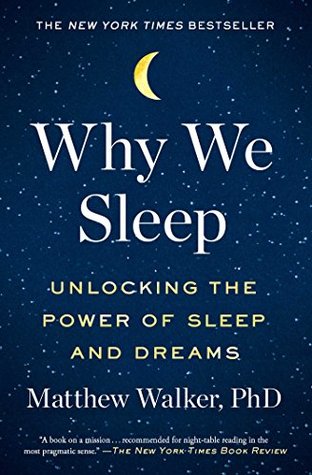
Matthew Walker’s Why We Sleep is a sweeping scientific argument for the centrality of sleep to virtually every aspect of human health, performance, and survival. Walker, a neuroscientist and sleep researcher at UC Berkeley, synthesizes decades of research — his own and others’ — to make the case that modern society is in the grip of a catastrophic sleep crisis, one that is largely invisible precisely because the chronically sleep-deprived have lost the ability to perceive how impaired they truly are. The book ranges across biology, psychology, public health, and evolutionary theory, covering everything from the mechanics of REM and non-REM sleep cycles to the cultural and institutional forces — school start times, workplace norms, artificial lighting — that conspire to rob us of the rest we need.
Walker writes with the urgency of an advocate as much as a scientist. His prose is accessible and deliberately alarming, piling on statistics and case studies to drive home a single overarching message: sleeping less than seven to nine hours a night is not a badge of productivity but a slow-acting poison. He connects insufficient sleep to an almost staggering list of conditions — Alzheimer’s disease, cancer, cardiovascular disease, obesity, depression, and immune dysfunction among them — and argues that no drug, supplement, or lifestyle hack can replicate what sleep does for the brain and body. The book is at its most compelling when explaining the specific, mechanistic functions of sleep: how deep non-REM sleep consolidates factual memories, how REM sleep processes emotional experiences and fosters creative insight, and how even a single night of poor sleep measurably degrades cognition, mood, and physical performance.
Key takeaways
-
Sleep is not optional downtime but an active biological process. During sleep the brain cycles through distinct stages that each perform different functions: non-REM sleep (especially slow-wave deep sleep) transfers and consolidates memories from short-term to long-term storage, while REM sleep strips the emotional charge from difficult experiences and enables novel associative thinking.
-
Chronic sleep deprivation is a serious public health crisis. Walker argues that the majority of adults in industrialized countries regularly sleep fewer than the recommended seven to nine hours, and that the consequences accumulate silently — impaired immune function, elevated cancer risk, disrupted metabolism, and significantly shortened life expectancy.
-
You cannot “catch up” on lost sleep. One of Walker’s most counterintuitive claims is that weekend lie-ins do not undo the neurological and physiological damage inflicted by a week of short nights. Sleep debt is not a simple ledger that can be balanced; some costs, particularly to memory consolidation and immune function, are permanent.
-
Dreaming (REM sleep) is a unique neurochemical state with profound functions. During REM sleep, stress-related neurochemicals are suppressed while emotional memories are reprocessed, effectively providing a form of overnight emotional therapy. Walker draws on this to explain why sleep deprivation is so tightly linked to anxiety, depression, and PTSD.
-
Caffeine, alcohol, and sleeping pills are poor substitutes for natural sleep. Walker explains that alcohol, widely used as a sleep aid, actually suppresses REM sleep and fragments sleep architecture. Sleeping pills induce sedation rather than genuine sleep, producing none of the restorative benefits of natural sleep cycles. Caffeine, meanwhile, masks sleepiness by blocking adenosine receptors without clearing the underlying sleep pressure.
-
Society is structurally hostile to sleep. School start times that conflict with adolescent circadian biology, workplace cultures that valorize early rising and long hours, and the ubiquity of screens and artificial light all systematically erode sleep. Walker calls for systemic changes — later school bells, enlightened employer policies, and better public awareness — not merely individual behavior change.
-
The glymphatic system links sleep to Alzheimer’s prevention. One of the book’s most striking scientific highlights is the brain’s waste-clearance system, which activates primarily during deep sleep and flushes out toxic proteins including amyloid-beta and tau, the plaques and tangles associated with Alzheimer’s disease. Walker presents this as powerful evidence that chronic sleep loss may be a significant driver of dementia risk.